Skip to content
Welcome to the third article in our three-part “3 Common Urinary Problems and How to Treat Them” series. We encourage you to read the other two articles, “Urinary Retention: Causes, Symptoms and Treatment” and “Urinary Tract Infection (UTI): Causes, Symptoms and Treatment“, which provide essential information on other urinary problems and how to treat them.
In this article, we will explore urinary incontinence — a common urinary complication affecting able‑bodied individuals as well as those with Spina Bifida, spinal cord injuries, or nerve damage. We will also examine the available treatment options and practical strategies for managing the condition.
Urinary Incontinence
What is Urinary Incontinence?
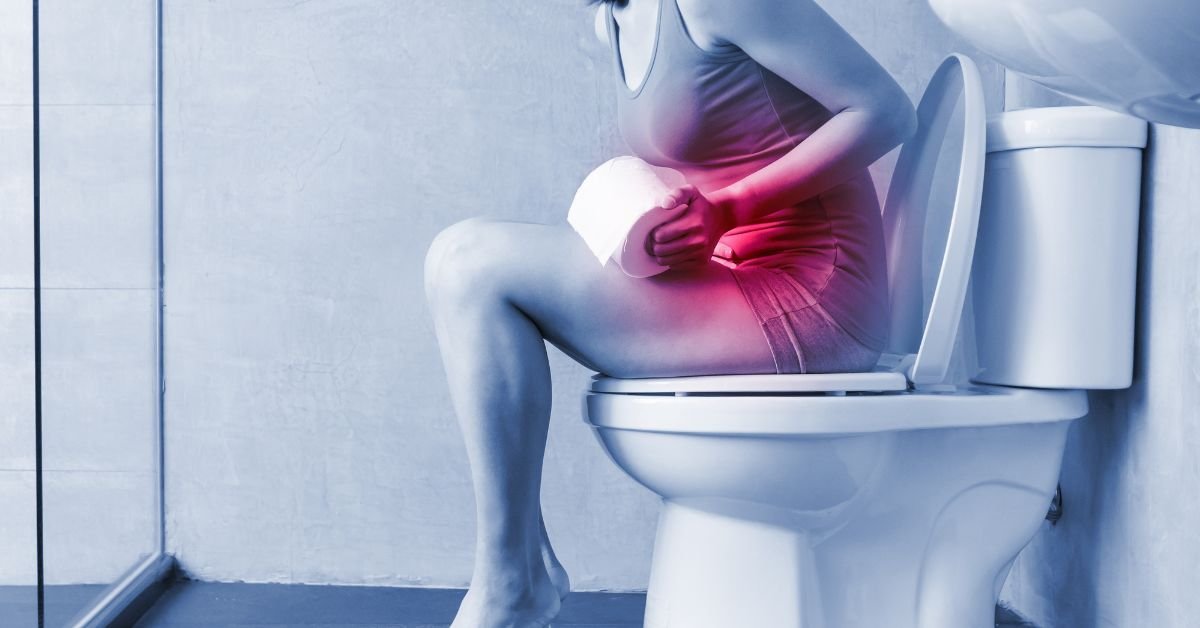
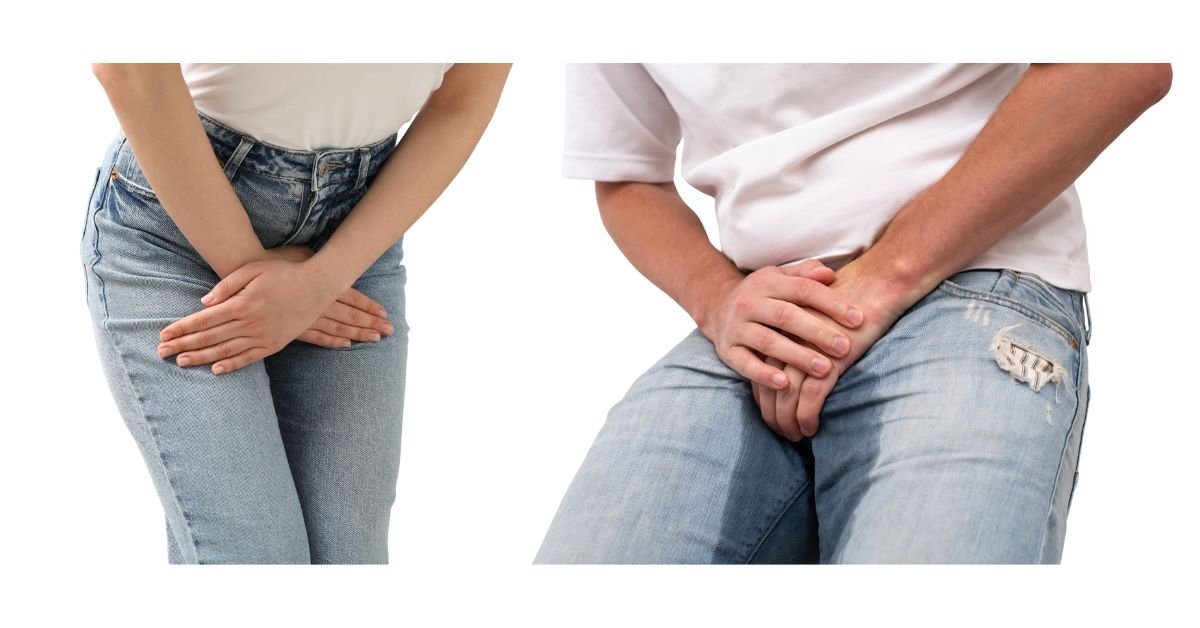
Urinary incontinence refers to the involuntary leakage of urine. In simple words, the inability to control urine is known as urinary incontinence. It is a common condition that affects both able-bodied and Spina Bifida (SB) men and women of all ages, and can have significant impacts on quality of life. This condition is not only a physical concern but often has psychological implications, as individuals may experience anxiety, embarrassment, or social withdrawal due to their symptoms.
Individuals with Spina Bifida (SB) or spinal cord injury have a condition called neurogenic bladder. In simple words, SB has caused you to lose control over your bladder. In some cases, it is a partial loss, and in others, it is a full loss of control. This neurogenic bladder can manifest in two primary ways: overactive bladder (OAB) and underactive bladder. Urinary incontinence in people with SB or spinal cord injury is a symptom of neurogenic bladder. It can’t be cured. But you can manage your symptoms.
If you are an able-bodied person, a SB parent or an SB individual, please don’t give up hope before trying every available solution within your reach. Solutions come in both affordable conservative forms and in pricey non-conservative forms. Remember this, as we will discuss it later.
What are Urinary Incontinence Symptoms?
There are different types of incontinence, and their symptoms can differ. The symptoms and severity of urinary incontinence range from occasionally leaking urine to leaking all the time. In some individuals, urinary incontinence can be triggered by coughing and sneezing, and some can have an urge to urinate that’s so sudden and strong that you can’t reach the toilet in time.
How Many Types of Urinary Incontinence Are There?
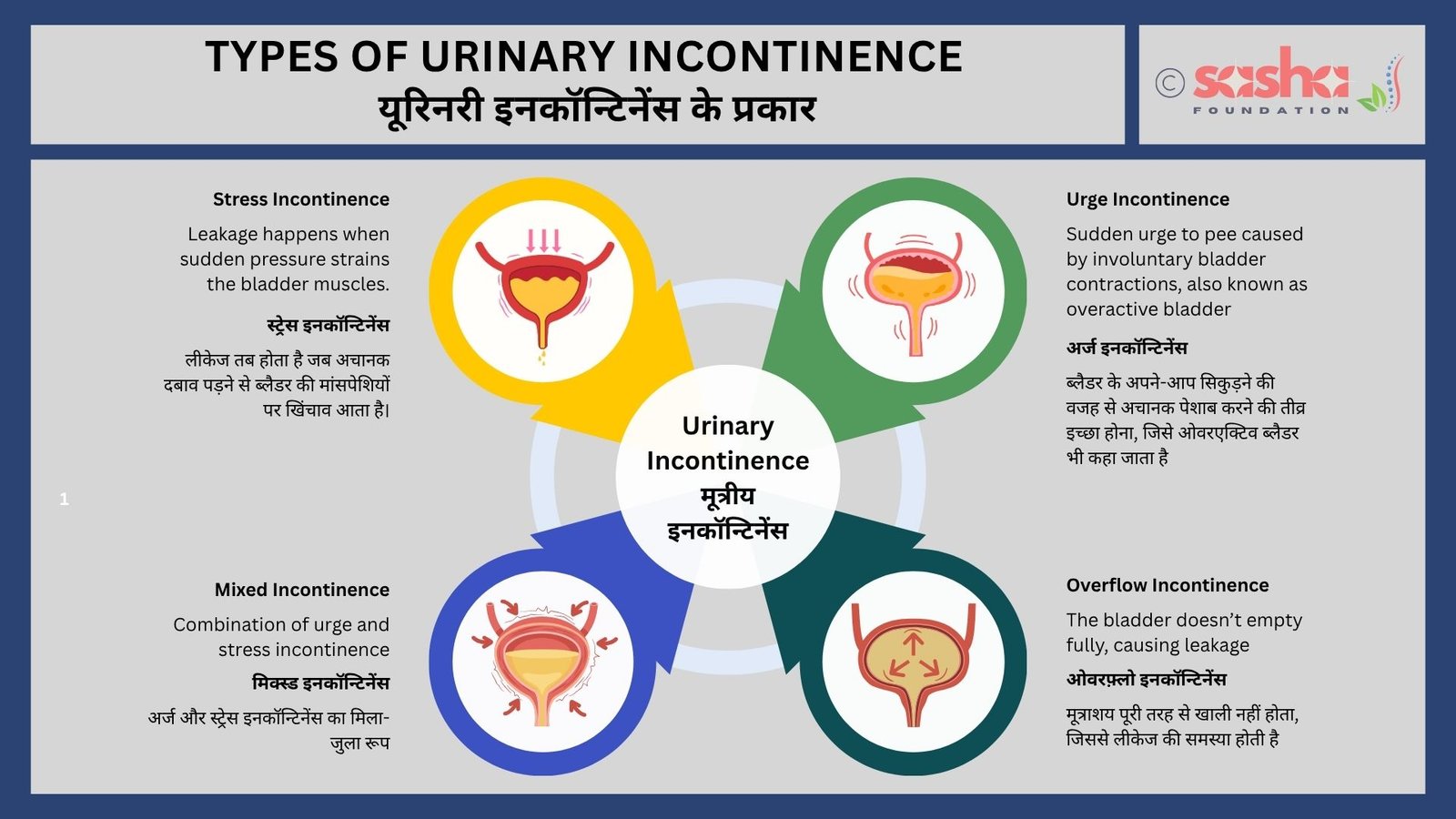
There are three types of Urinary Incontinence
- Stress Incontinence
- Urge Incontinence
- Mixed Incontinence
Stress Incontinence (SUI)
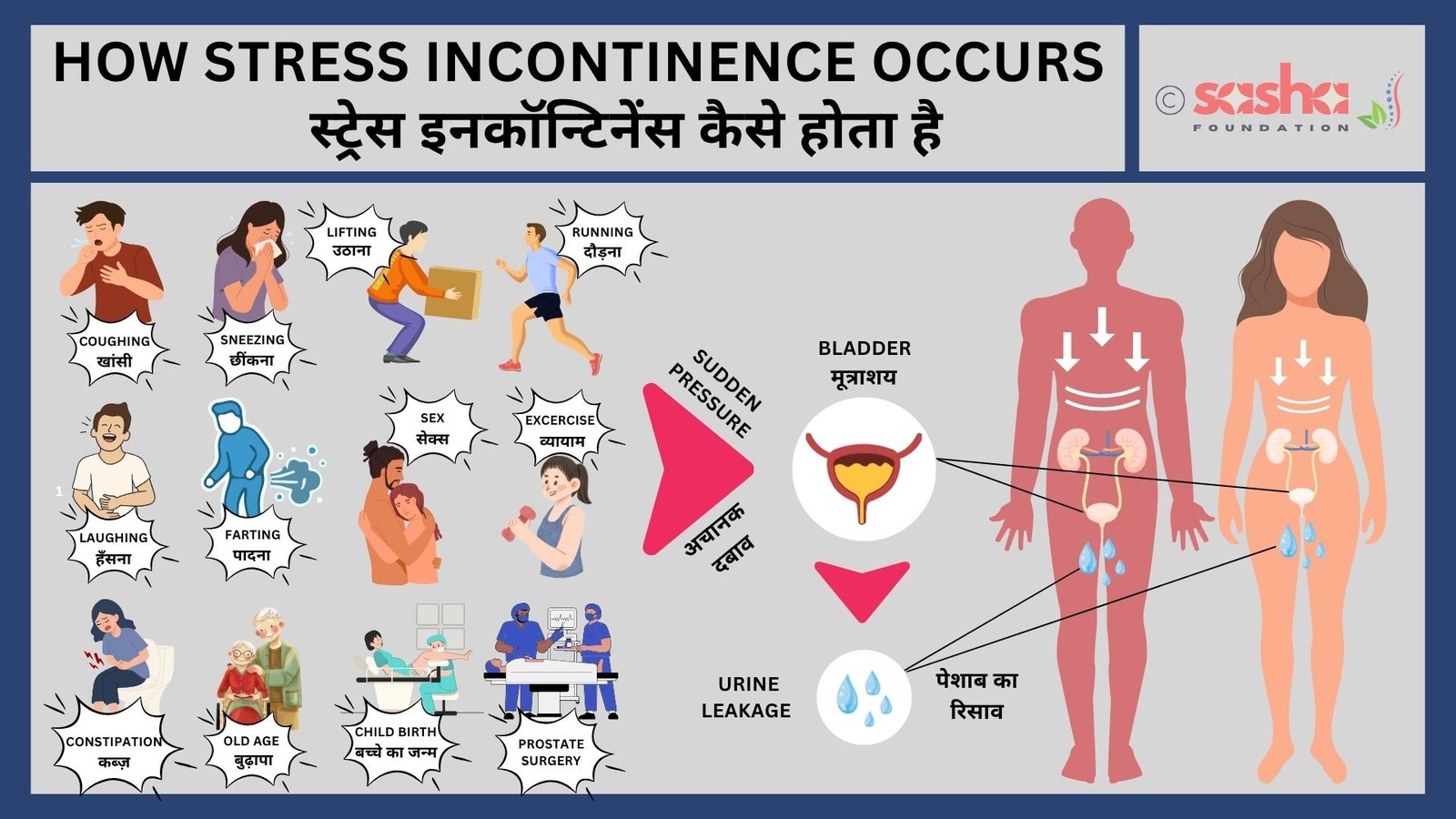
As we already discussed, incontinence is involuntary leakage of urine. Stress here means pressure on the bladder. Stress incontinence (SUI) is urine leakage caused by sudden pressure on the bladder through physical activities such as coughing, sneezing, laughing, exercise, or lifting something heavy. In SB individuals, you can also leak when you pass gas, shift positions, stand or sit. Stress incontinence occurs when the urinary sphincter muscle and/or the pelvic floor of the bladder is weakened.
In women, this could be due to physical changes resulting from pregnancy, childbirth (especially vaginal delivery), and menopause. In men, removal of the prostate gland can lead to stress incontinence. Stress incontinence is also prevalent in people 65 or older, overweight/obese people (BMI greater than 25) and smokers.
In SB individuals, stress incontinence is very common, and in most cases, it is caused by a weak or inactive urinary sphincter muscle. However, in some rare cases, SB individuals have no stress incontinence as they have an overactive urinary sphincter muscle. Chronic severe constipation is also a contributor in SB individuals’ cases.
Causes ot Stress Incontinence

How Stress Incontinence Occurs
Urge Incontinence (UI)
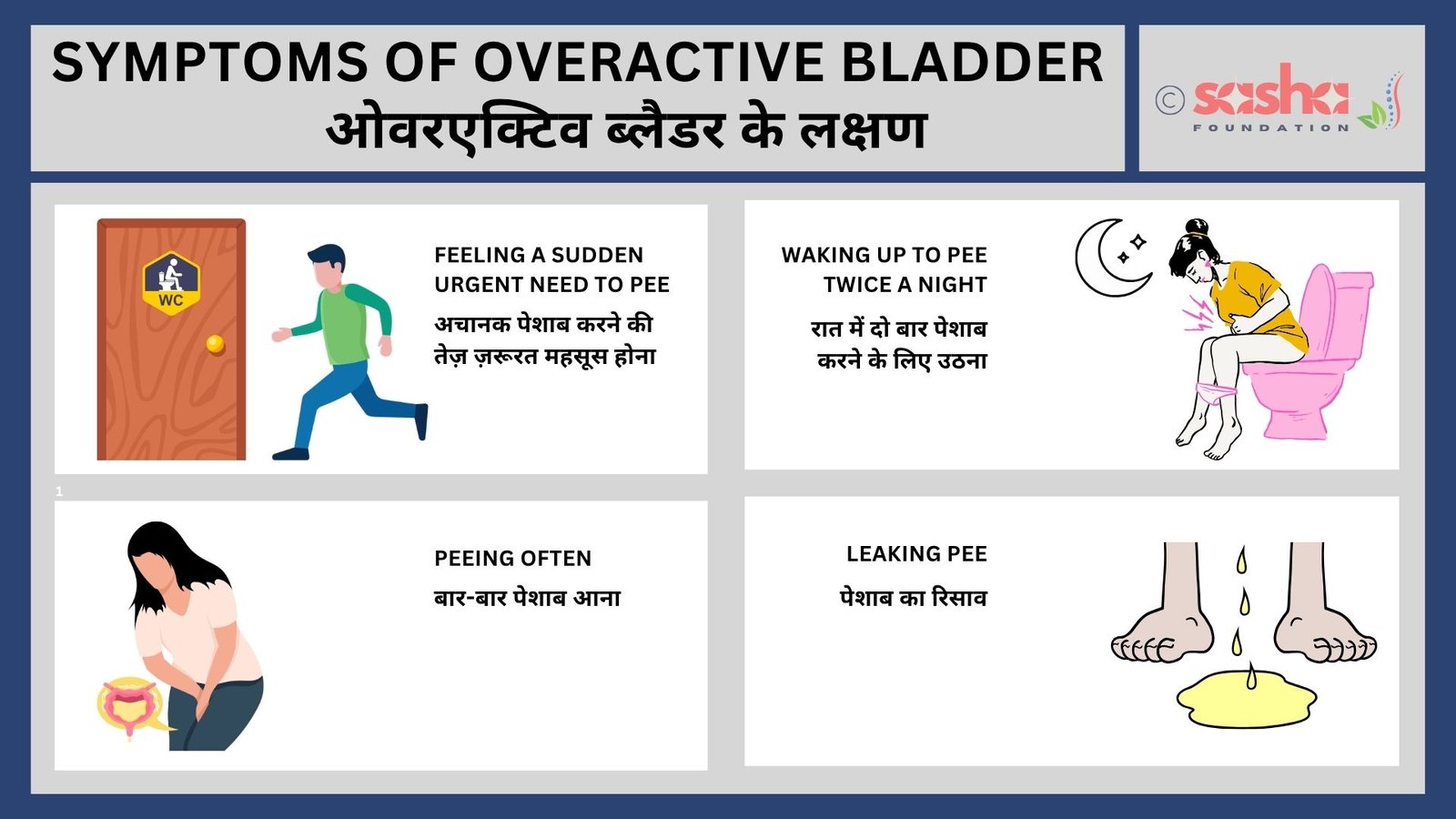
As we already discussed, incontinence is involuntary leakage of urine. Urge here means a sudden, intense impulse or pressing want to urinate, and you can’t hold it. Your bladder muscle contracts and may give you only a few seconds to a minute’s warning. You may accidentally leak pee before you make it to the bathroom.
Urge Incontinence (UI) not only leads to involuntary urine leakage but also causes frequent trips to the bathroom during both day and night. These nighttime interruptions can significantly disturb the sleep cycle, ultimately affecting an individual’s overall health and well‑being.
The most common cause of urge incontinence is an overactive bladder (OAB). For this reason, UI is often described or classified as OAB. In this condition, the bladder muscles contract involuntarily, almost as if the bladder has a mind of its own. These sudden contractions mimic the feeling of bladder fullness, making you feel the urge to urinate even when the bladder isn’t actually full. These bladder squeezes (contractions) also cause the urinary sphincter muscle inside your urethra to relax. When this muscle opens, it lets urine leak out.
In Spina Bifida individuals, OAB is very common, and in most cases, it is caused by neurogenic bladder, as discussed earlier. You may have had mild urge incontinence symptoms for a while. Over time, overactive bladder symptoms can get worse and become more noticeable. Urge incontinence may be caused or aggravated by urinary tract infections, bladder irritants (pharmaceuticals, foodstuff, etc.), urinary retention, and severe constipation. Parkinson’s disease, Alzheimer’s disease, stroke, injury, or nervous system damage associated with multiple sclerosis may cause UI.
Symptoms of Overactive Bladder
Overflow Incontinence
As we already discussed, incontinence is involuntary leakage of urine. Overflow here means spilling over of urine when you can’t empty or don’t empty your bladder as often as you need to, causing leakage and dribbling. Basically, overflow incontinence is when you leak or dribble urine because your urinary bladder is too full. This might be the case if you won’t or find it hard to empty your bladder fully when you urinate.
This type of incontinence may occur in people with a damaged bladder, blocked urethra, spinal cord injury, congenital birth defect, or nerve damage from diabetes and in men with prostate gland problems. Treatment depends on the severity of your symptoms and ranges from self-catheterisation, behaviour advice, and physical therapy to pharmaceuticals and surgery. Oftentimes a combination of treatments is most effective.
In individuals with Spina Bifida (SB), overflow incontinence is seen either when people are not advised to self-catheterise or when individuals won’t catheterise out of fear or laziness. I often see that individuals run away from self-catheterization and prefer to pass urine by exerting pressure and don’t void urine properly, leading to leakage and dribbling.
Mixed Incontinence
If you experience symptoms of more than one type of urinary incontinence, such as stress incontinence and urge incontinence (overactive bladder), you have mixed incontinence.
In individuals with SB, it is common to see mixed incontinence. In individuals who self-catheterise, stress incontinence and OAB are present as mixed incontinence and in individuals who avoid or don’t self-catheterise, overflow incontinence, stress incontinence and OAB are present as mixed incontinence.
Diagnosis and Tests for Urinary Incontinence
Maintaining a urine diary
A urine diary involves meticulously tracking your daily liquid intake and urine output, including the timing for each. For the intake, you record the quantity and type of fluids consumed—such as water, milk, juice, tea, or coffee—along with the exact times. For output, note the time you passed urine or were catheterised and the voided urine volume. By comparing your fluid intake to urine output, you can better understand when your bladder feels full and identify the leakage patterns. This is a step that you can follow at home. Share this data with your healthcare provider. How to make a urine diary and maintain urine leakage records (the format) can be read here.
What Tests Identify Incontinence?
I prefer to organise these into three distinct categories, and I recommend following this sequence. Doing so not only spares you unnecessary discomfort from avoidable tests but also helps minimise costs. The categories are:
Step 1 – Check for infection
The first step is to determine whether you have any infection in urine
- Urinalysis – This involves two tests: a urine routine and a urine culture. Your healthcare provider will examine the sample to check for urinary tract infections (UTIs), blood in the urine (hematuria), and other possible conditions. The urine routine report is usually available the same day, while the culture report takes about 72 hours. Any abnormalities detected must be addressed before proceeding with further investigations. All subsequent tests mentioned below must be performed only when you are UTI‑free.
Step 2 – Measuring how much urine stays in your bladder after you urinate
The second step is to determine whether your bladder is emptying properly. As mentioned earlier, retained urine can contribute to incontinence. Therefore, the initial test is:
- USG KUB – An ultrasound of the kidneys and urinary bladder. An ultrasound is a painless imaging test that allows the healthcare professional to determine the health of your bladder, kidneys and other organs. The test shows your full bladder capacity and how much urine is left in your bladder after you urinate. The test also shows the health of your kidneys and other organs.
Step 3 – Measuring bladder pressure, stress incontinence and leakage pattern
The third step is to determine and understand how well your urinary system holds and releases urine. The test is:
- Urodynamic Studies – Urodynamics is a test that measures pressure in your bladder during filling and emptying. This test can check for stress incontinence and the strength of the pelvic floor muscles. As your bladder fills, you may be asked to cough to test for leaks. This test may be used with a pressure-flow study. This shows how much pressure your bladder uses to empty all the way. This test can identify post-void residual urine volume.
Please note: For most individuals, the underlying issue is usually identified at this stage. With your healthcare provider’s guidance, you can begin implementing the recommended measures and focus on improving your overall quality of life. However, if a diagnosis is insufficient, you can move on to the next step.
Step 4 – Checking for bladder and urethral abnormalities
This fourth step is to identify the presence or absence of bladder and urethral abnormalities, including vesicoureteric reflux (VUR), also known as back reflux. The test is:
- MCU – Micturating Cystourethrogram (MCU), also called a Voiding Cystourethrogram or VCUG, is a specialised X-ray of the bladder to examine the urinary bladder and urethra while the bladder fills and empties. A technician or doctor inserts a urinary catheter into your urethra and extends it to your bladder. Then, they insert a contrast dye through the catheter and take an X-ray. This test can detect vesicoureteric reflux (VUR) or back reflux, where urine flows backwards from the bladder up into the ureters and kidneys. This test evaluates blockages and can also find abnormalities.
Please note: As I’ve explained in earlier articles, an MCU is a crucial test if you experience urine retention or urinary incontinence. In particular, individuals with Spina Bifida (SB) should undergo this investigation at least once to establish a baseline for future reference. Vesicoureteral reflux (VUR), or backward flow of urine, can significantly complicate long‑term health. It is also important to mentally prepare yourself, as this test can be quite uncomfortable for many people.
Step 5 – Looking inside your bladder and urethra
This fifth step is to see inside your bladder and urethra to find or treat problems in the bladder and urinary tract. Most people don’t need a cystoscopy to check for incontinence.
- Cystoscopy – A healthcare provider will insert a thin, lighted instrument with a camera at the end (cystoscope) into your urethra and guide it up to your bladder to examine your urinary system. In some parts of the world, it is performed under general anaesthesia, and in other parts under local anaesthesia.
Sex and Urinary Incontinence
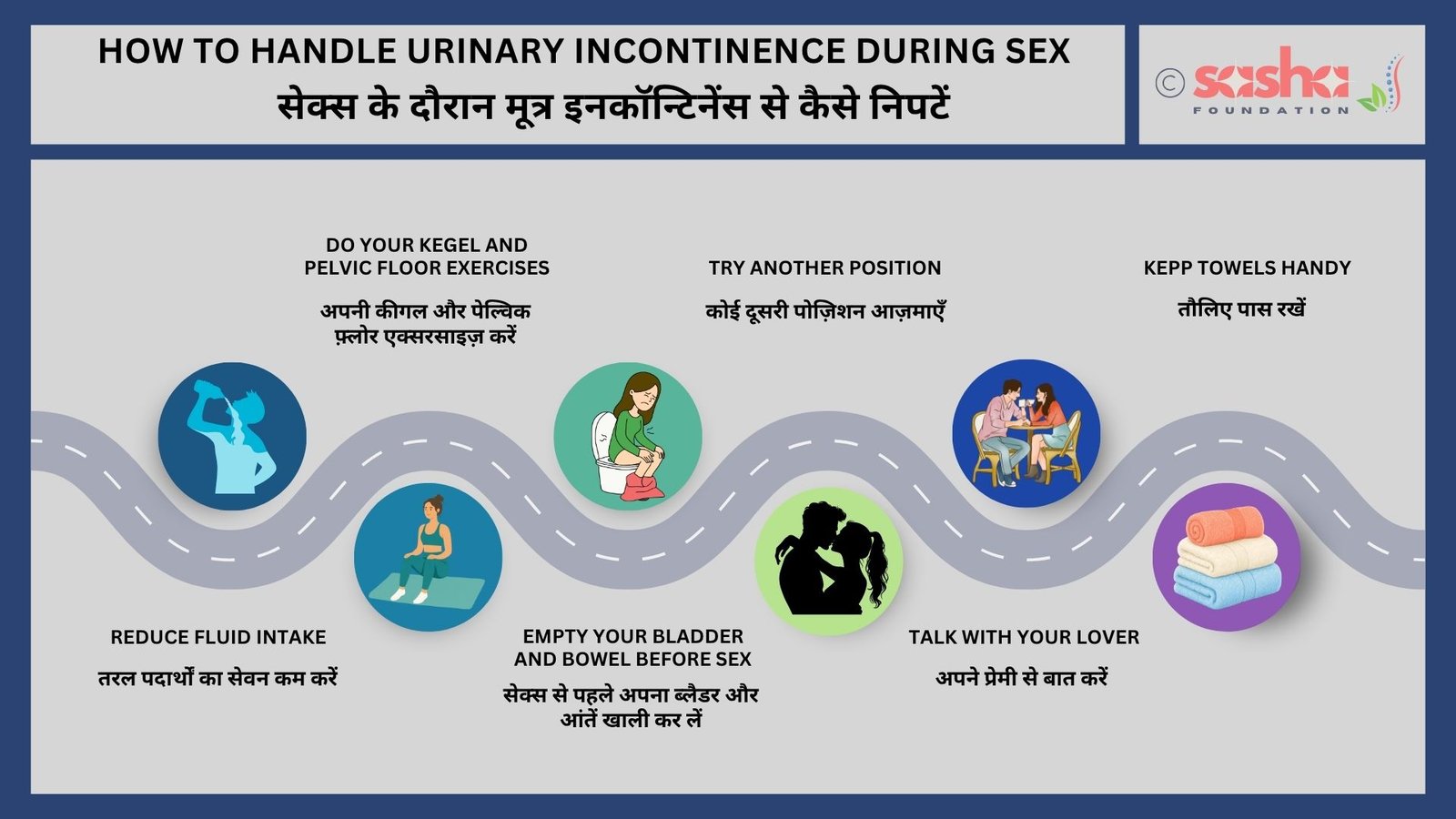
Leaking urine during foreplay and sexual intercourse can be upsetting. But there are ways to navigate through this challenge:
- Talk with your lover – Easier said than done.This might be hard, but tell your lover about your symptoms. Your lover’s support and willingness to help can make your symptoms easier to handle.
- Do your Kegel and pelvic floor exercises – Ideally, these should be part of your daily routine, as they strengthen the pelvic floor muscles and help reduce or even stop urine leakage, depending on your condition. Before meeting your lover, perform three sets of the two exercises described in this article “Urinary Incontinence: Kegels & Pelvic Floor Training at Home“. Doing them immediately beforehand not only reinforces muscle strength but also heightens awareness of the pelvic floor, allowing you to engage these muscles if needed during intimacy. This practice can help prevent leakage and, for men, may also support improved control and endurance. This could also save men from premature ejaculation.
- Reduce fluid intake – To reduce your chances of leakage, don’t drink fluids for an hour or so before sexy time. People who catheterise should stop fluids right after their last catheterisation before sexy time.
- Empty your bowel before sex – Empty your bowel before you start having sexy time. Excess poop or severe constipation aggravates leakage.
- Empty your bladder before sex – Empty your bladder before you start having sexy time. Catheterise if you are a person who practices self-catheterisation.
- Try another position – Changing positions may make leakage less likely for you. For men, standing or doggy might give better control of the pelvic muscles or any other position where there is less pressure on the bladder could work. For women, being on top might give better control of the pelvic muscles. Identify a position where you leak less and talk to your lover.
- Be prepared – Having towels handy or using paper towels on your bed may ease your worry and hold leakage. You can also use them if you leak.
- Use humour – Sometimes, even after doing everything right, a little leakage can still happen. In that moment, don’t panic — laugh it off! For example, you could joke, ‘Well, I didn’t plan on giving a golden shower today, but hey, life’s full of surprises! One thing you can chalk off your to-do sex list.’ Turning it into a funny moment helps ease the tension and keeps the mood light.
Hope these remedies will help you. Please don’t let urinary leakage stop you from anything. Keep your head high and pants low every time you have sexy time.
Sasha’s Suggestion: A Personal Note
Talking about personal struggles isn’t easy, especially when something feels wrong. Urinary leakage can affect people of all ages — from schoolchildren and teenagers to college students and adults — each experiencing it in very different ways. We must listen with empathy and understanding. Worry about leaks may keep people from everyday activities like exercising at the gym, meeting friends, going on dates, or even enjoying a relaxing comedy movie. The good news is that many cases can improve, or even resolve, through simple exercises and lifestyle changes that can be practised at home.
Special Note for Individuals with Spina Bifida
Let’s first face the truth: people with Spina Bifida (SB) or parents of children with SB will have to put in extra effort. Especially, getting children to Kegels and pelvic floor exercises is going to be challenging, to say the least.
I want to address something. In my conversations with individuals from the SB community, this condition stands out as one of the most annoying or troubling issues, alongside faecal incontinence. Urine leakage triggers a nasty waterfall effect on personal, social and love life. This troublesome silent or invisible issue plays on an affected individual’s mind like no other.
Most of the parents or relatives often misunderstand the psychological ramifications of urinary incontinence and fail to show genuine intent towards resolving or looking for solutions. SB individuals’ parents or relatives start believing that there is no solution; this is the new normal. A lot of SB individuals, who are young boys or girls or who are wheelchair bound or use support to walk, depend on their parents or relatives for solutions to their everyday needs, solutions and survival.
In individuals with SB, it is common to see mixed incontinence. In individuals who self-catheterize, stress incontinence and OAB are present as mixed incontinence; in individuals who avoid or don’t self-catheterize, overflow incontinence, stress incontinence, and OAB are present as mixed incontinence.
If an SB individual wants to stay dry, the first step is to take care of overflow incontinence through self-catheterization. Overflow incontinence is also a major contributor to back reflux, which I am sure you don’t want.
Link to all The Three Must Read Articles of the Series “Urinary Incontinence”

How to Manage Urinary Incontinence: Care and Treatment
This article covers various management and treatment options

Urinary Incontinence: Kegels & Pelvic Floor Training at Home
This article covers Kegels & pelvic floor muscle training, form and tips.

How You Can Treat Urinary Incontinence: A 10-Step Plan
A 10-step plan to identify and fix your incontinence
Medical information
This article provides general educational information about Spina Bifida and is not a substitute for individual medical advice, diagnosis or treatment. Every person with Spina Bifida is different. Please discuss your individual circumstances with your qualified healthcare professional.
About the Author

Raul/DJ Vivek
Meet Vivek Bharadwaj, a remarkable individual who has defied the odds and soared to new heights despite living with Spina Bifida. As the founder of the Sasha Foundation, Vivek tirelessly advocates for others facing similar challenges. His unwavering commitment to support, awareness, and empowerment had made a lasting impact on the Spina Bifida community.
FAQ
What is urinary incontinence?
Urinary incontinence is the involuntary loss of bladder control, which results in the accidental leaking of urine.
What are the first signs of urinary incontinence?
The first signs of urinary incontinence often start small, including minor accidental leakage when you cough or a sudden, hard-to-control urge to rush to the bathroom.
What are the most common types of incontinence?
Stress incontinence, urge incontinence or overactive bladder, mixed incontinence and overflow incontinence are the most common types of urinary incontinence.
What is the most common treatment for incontinence?
The most common treatment is Kegels and pelvic floor exercises.
Is there a pill I can take to stop peeing so much?
Yes, there are pills which can help you with frequent urination. Talk to your doctor about it.
Which doctor should I see for urinary incontinence?
Make an appointment with a urologist if you are seeing signs of incontinence.
When should I see a healthcare provider?
Talk to a healthcare provider when you first notice incontinence symptoms or changes in bathroom trips.
Can incontinence be prevented?
You can’t prevent incontinence, but you can lower your risk by keeping your pelvic floor muscles strong.
Will I have incontinence for my whole life?
Sometimes urinary incontinence can be a short-term issue. Other times it can be a long-term issue, especially if you have a chronic condition like Spina Bifida, spinal injury, stroke, diabetes, etc.
Before I meet my healthcare provider, what should I do?
Make a list of:
Your symptoms: Document how much you leak and when.
Causes: Document what or when you leak
Any medication, supplements or vitamins you take: Write the dosage and how often you take them.
Duration: Document when your leakage issue started.
Investigations: Carry all your investigation reports, if you have any
What questions should I ask my healthcare provider?
What’s causing my urinary incontinence?
What tests might I need to find the cause of my incontinence?
Can anxiety cause my urine leakage?
Will my urinary incontinence get worse?
Could pelvic floor exercises help me? How do I do them?
How does my weight affect my condition?
Could the medicines I take be making my condition worse?
Do you think I need Botox or nerve therapy?
Will I need surgery? Is it right for me?
What are the risks of the surgery?
What questions will my healthcare professional ask me?
How often do you leak urine?
When you leak urine, is it a few drops or are your clothes soaked?
Are there times when you know that you will leak?
Do you leak urine when you exercise?
Do you wake up during the night to urinate? How often?
How much liquid do you drink every day?
Does anything seem to make your incontinence better? How about worse?
What bothers you most about your urinary incontinence?
Do you also have bowel leakage? How often? Does this cause you to restrict your activities?