Skip to content
Welcome to the first article in our three-part series “3 Common Urinary Bladder Problems and How to Treat Them”. In this article, we will explore the three most common urinary problems and how to treat them.
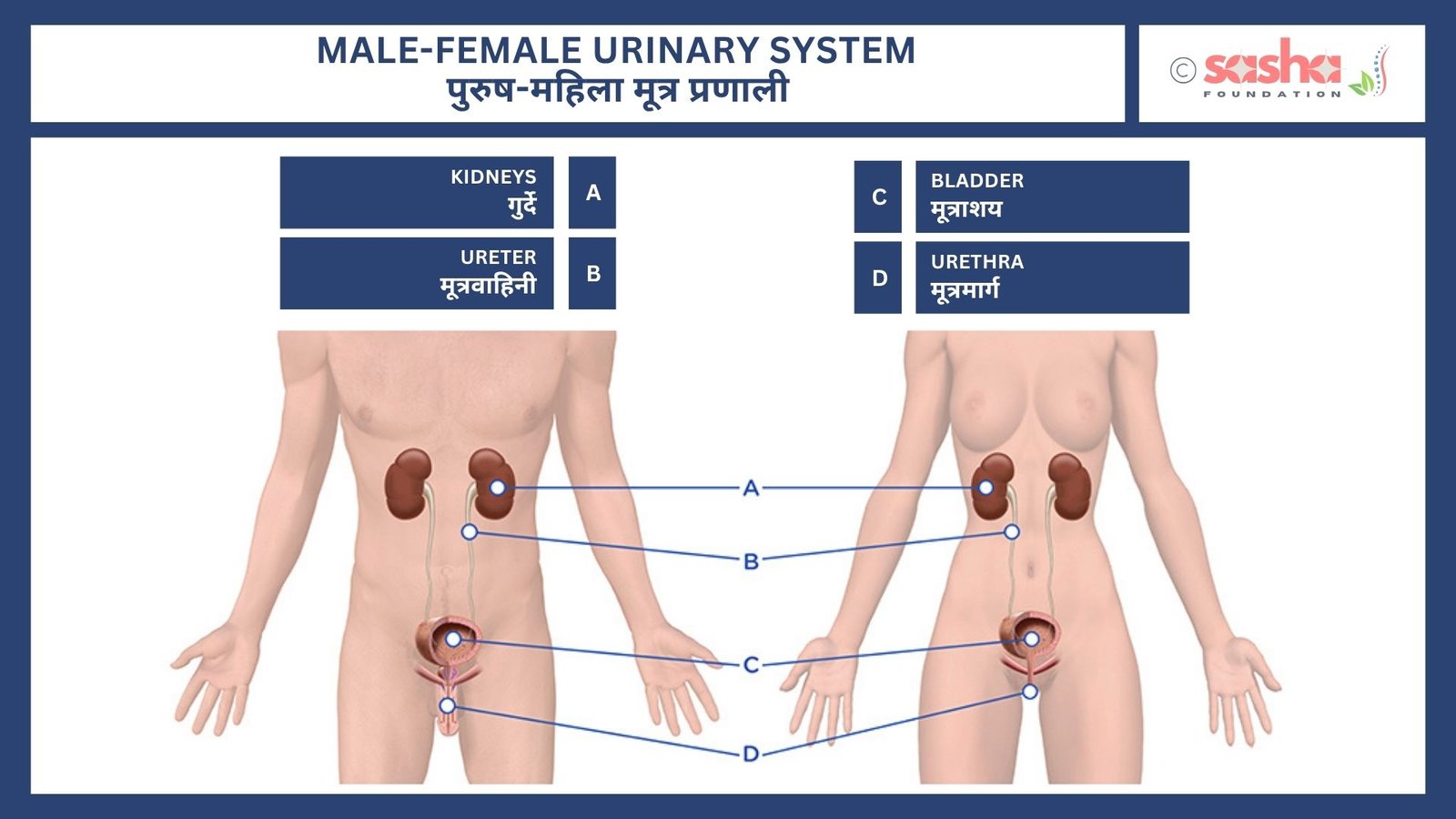
Before we discuss urinary complications, let’s learn about the human urinary system and how it works with the help of a diagram.
Urinary System
The human urinary system is a complex system that filters and removes waste from our bodies.
What is the Urinary System and How Does It Work?
The urinary system is a critical component of the human body, responsible for the production and elimination of urine (filtering liquid waste), thus maintaining the body’s fluid balance and chemical composition. In simple words, the urinary system is like the body’s cleaning and draining team. It makes urine (pee) and gets rid of it, so the body stays healthy. The urinary system consists of kidneys (A), ureters (B), the bladder (C), and the urethra (D).
The Function of the Urinary System
Kidneys (A): At the core of this system are the kidneys, the large bean-shaped organs located towards the back of the abdomen, on either side of the spine. Kidneys play a central role in filtering blood to remove waste products from the body. They remove waste products by manufacturing urine. Each kidney contains approximately one million tiny filtering units called nephrons (small network of tubes), which are vital for the regulation of various bodily processes. The kidneys regulate the amount of water in the body. Healthy humans produce about 1.5 litres of urine a day.
Ureters (B): Ureters are 25–30 cm long tubes lined with smooth muscle responsible for transporting urine from the kidneys to the bladder. The ureters enter the back of the bladder via the Trigone area, a valve that prevents urine from refluxing (going) back to the kidneys. Urine travelling backwards to the kidneys is known as back reflux or VUR (vesicoureteral reflux), and it can damage the kidneys. Remember this valve and back reflux, as we will discuss this later.
Bladder (C): The bladder is a hollow muscular organ that can expand and contract to hold varying amounts of urine. The bladder stores urine until the body is ready to expel it. The bladder is located in the pelvis above and behind the pelvic bone. The bladder holds an average maximum volume of 400- 600 mL of urine. It is normal to urinate 4 – 8 times per day, normally voiding 200-400 mL of urine each time.
Urethra (D): The urethra is a tube that carries urine from the bladder to the outside of the body, a process we all know as urination. In males, the urethra also passes through the prostate and penis, while in females it is shorter and exits just above the vaginal opening. The male urethra is approximately 20 centimetres long, while the female urethra is only about 4 centimetres in length, influencing the dynamics of urinary tract infections and other complications. Remember this, as we will discuss this later.
Together, these organs of the urinary system ensure proper removal of toxins and conservation of water.
Types of Most Common Urinary Problems
Common urinary problems include a range of conditions that can significantly affect an individual’s health and quality of life. The most common types of urinary problems are:
- Urinary Retention
- Urinary Tract Infections (UTIs)
- Urinary Incontinence
Urinary Retention: Causes, Symptoms and Treatment
Urinary retention — a common urinary complication affecting able‑bodied individuals as well as those with Spina Bifida

Urinary Tract Infection (UTI): Causes, Symptoms & Treatment
Urinary Tract Infections (UTIs) are common infections that affect millions of individuals each year.

Urinary Incontinence: Types, Causes & Symptoms
Urinary incontinence — a common urinary complication affecting able‑bodied individuals as well as those with Spina Bifida
Medical information
This article provides general educational information about Spina Bifida and is not a substitute for individual medical advice, diagnosis or treatment. Every person with Spina Bifida is different. Please discuss your individual circumstances with your qualified healthcare professional.
About the Author

Raul/DJ Vivek
Meet Vivek Bharadwaj, a remarkable individual who has defied the odds and soared to new heights despite living with Spina Bifida. As the founder of the Sasha Foundation, Vivek tirelessly advocates for others facing similar challenges. His unwavering commitment to support, awareness, and empowerment had made a lasting impact on the Spina Bifida community.
FAQ
What is the urinary system and its function?
The urinary system is a group of organs that filters blood, creates urine, and removes liquid waste from the body.
What are the four main parts of the urinary system?
The kidneys, ureters, bladder, and urethra.
What are the 7 functions of the urinary system and their roles?
The urinary system filters blood, removes toxic wastes, and keeps the body’s internal environment stable through seven core physiological functions managed primarily by the kidneys:
Waste Excretion
Water Balance
Electrolyte Regulation
Acid-Base Balance
Blood Pressure Control
Red Blood Cell Production
Vitamin D Activation
How is urine produced?
Urine is produced by the kidneys through three main steps in tiny filters called nephrons: filtration, reabsorption, and secretion.
What are the 3 common urinary problems?
Urinary Retention, Urinary Tract Infections (UTIs) and Urinary Incontinence are the 3 common urinary problems
What are the 5 warning signs of bladder problems?
The 5 key warning signs of bladder problems are blood in the urine, painful urination, frequent urges, urinary urgency, and lower back or pelvic pain.
Who should I see if I am having bladder problems?
You should see a urologist for your bladder problems.