Skip to content

In this article, I will explain digital evacuation (digital disimpaction of stool) and transanal irrigation (TAI), two techniques that can play an important role in bowel management for people with Spina Bifida, spinal cord injuries, nerve damage, and other bowel disorders. I will also walk you through the available treatment options and share practical tips to help improve bowel function and quality of life.
For most people, emptying the bowel is straightforward. However, it doesn’t work smoothly for people with Spina Bifida, spinal cord injury, or nerve injury, as they have neurogenic bowel — a complicated bowel dysfunction. If you experience severe constipation, bowel leakage, or spend too much time on the toilet, this guide is for you.
As you all know, I am a person with Spina Bifida and a neurogenic bowel. The guidance I am about to share is based on more than three decades of personal experience and practice. I have followed and applied these principles myself and taught many, and when implemented correctly, they can be highly effective.
This is a comprehensive article that covers a range of important information. To navigate directly to topics that interest you, simply use the TOC tab on the left-hand side of your screen.
What is Neurogenic Bowel?
Neurogenic bowel is a condition in which normal bowel function is affected by damage to the brain, spinal cord, or nerves. The muscles and nerves that control the bowel work together to move stool through the intestines and regulate bowel movements. When these nerve signals are disrupted, it can become difficult to empty the bowels properly or control bowel movements.
The main symptoms of neurogenic bowel dysfunction (NBD) are constipation and faecal incontinence (bowel leakage). These problems can adversely impact a person’s comfort, independence, dignity, and overall quality of life.
Proper management of neurogenic bowel problems, including constipation, faecal impaction, and bowel leakage, can help prevent complications and improve comfort, dignity, and independence. Bowel care should begin early and, over time, as a person’s needs and circumstances change, should be adjusted.
People with Spina Bifida or spinal cord injury have to manage neurogenic bowel just like they have to manage neurogenic bladder. A consistent bowel routine can help reduce neurogenic bowel-related pain and support bowel health. It can also help prevent complications such as haemorrhoids, anal fissures, and rectal prolapse.
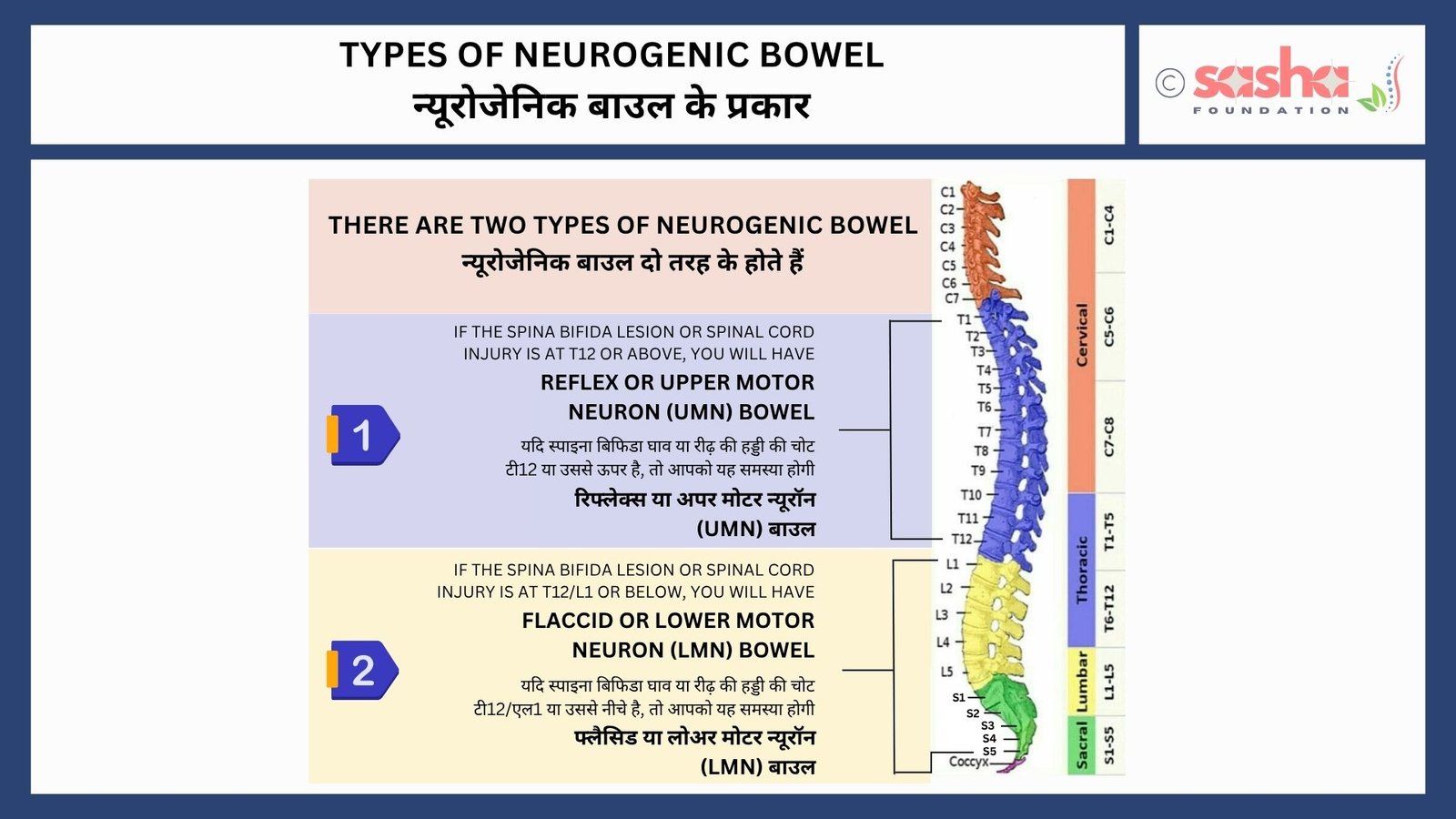
What are the Main Types of Neurogenic Bowel?
Reflex (Spastic) Bowel
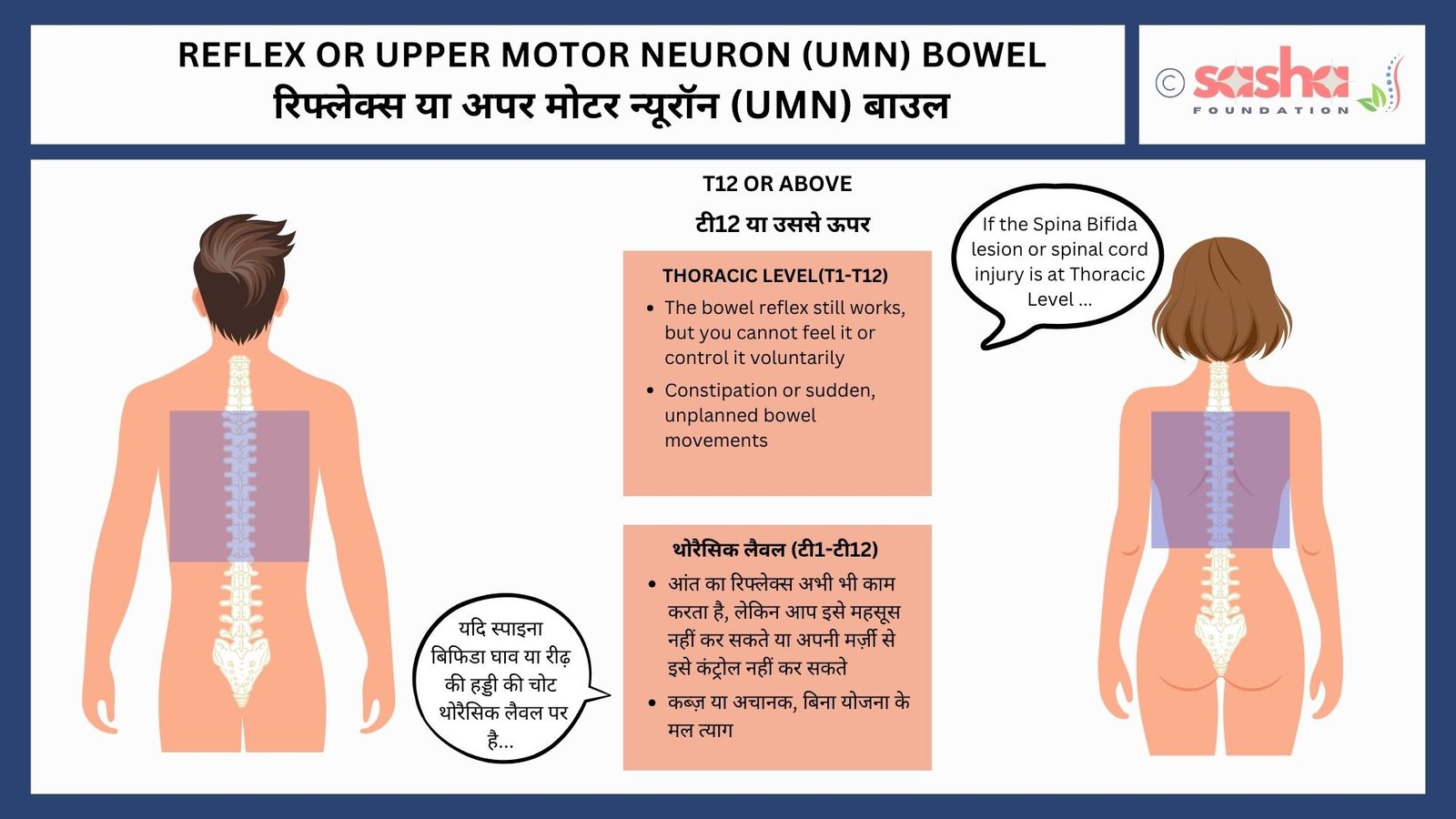
A reflex or spastic bowel, also known as an upper motor neuron (UMN) bowel, is caused by damage to the upper spinal cord above the sacral level, typically at T12 or higher.
Spina Bifida Lesion or Spinal Cord Injury Scale: T12 or above
What Happens in Reflex Bowel: The bowel reflex still works, but you cannot feel it or control it voluntarily.
Reflex Bowel Causes: Constipation or sudden, unplanned bowel movements.
Flaccid (Areflexic) Bowel
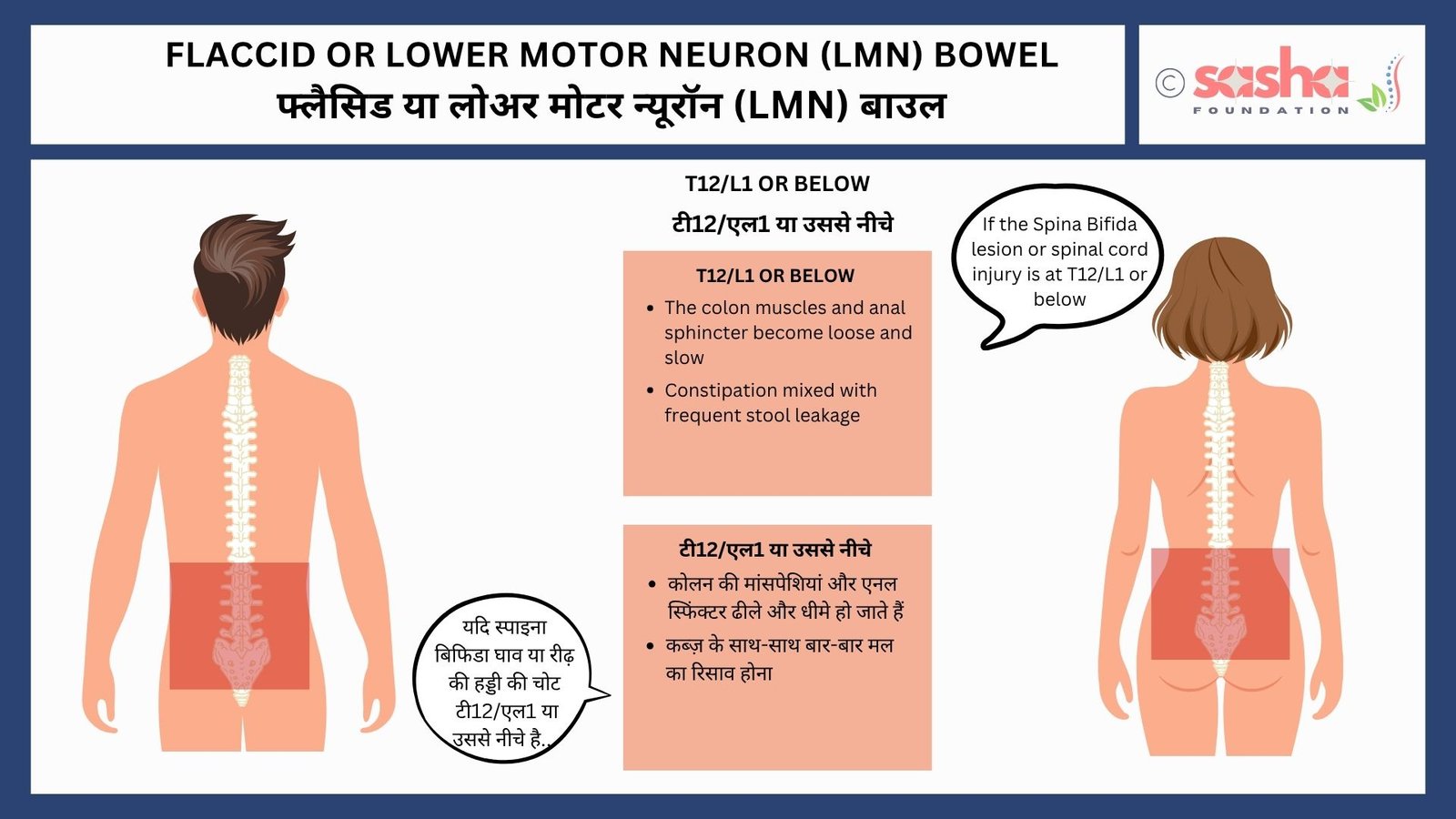
A flaccid or areflexic bowel, also known as a lower motor neuron (LMN) bowel, is caused by damage to the lower spinal cord at or below the sacral level, typically at T12/L1 or below.
Spina Bifida Lesion or Spinal Cord Injury Scale: T12/L1 or below
What Happens in Flaccid Bowel: The colon muscles and anal sphincter become loose and slow.
Flaccid Bowel Causes: Constipation mixed with frequent stool leakage.
What are Your Options to Manage Neurogenic Bowel?
The following options can be divided into two categories: conservative and non-conservative. Conservative options are non-invasive, and non-conservative options are invasive in nature.
- Lifestyle and behavioural changes: Diet, fluid intake and positioning.
- Aperients and laxatives: Additional oral medications or supplements that help soften stool and promote its movement through the bowel. These come in many forms, but the two most commonly prescribed are bulk-forming laxatives and stool softeners.
- Rectal Stimulation: Through manual (digital) or chemical (enema, suppository). Digital evacuation (also known as digital disimpaction or manual evacuation of stool) falls under this category.
- Bowel irrigation or transanal irrigation (TAI): Bowel irrigation through a low or high delivery system.
- Surgical: Antegrade colonic irrigation, commonly known as an Antegrade Continence Enema (ACE) or Malone procedure (MACE), is a surgical technique that flushes fluid through the top of the large intestine to empty the bowels in a controlled way.
Over the years, I have dealt with many medical challenges, and I have learned to follow a simple principle: begin with the conservative (non-invasive) treatment options and work your way up if and when needed. Although I have had many surgeries and recognise their value, I only consider surgery when conservative treatments have been exhausted or when they are unlikely to help.
What is a Good Bowel Routine?
A good bowel routine is not just about having regular bowel movements. It should also ensure that the bowel empties effectively. Your bowel routine should not feel like a burden. The following five considerations are essential for creating a bowel routine that is both reliable and successful.
The 5 Rights of Bowel Management
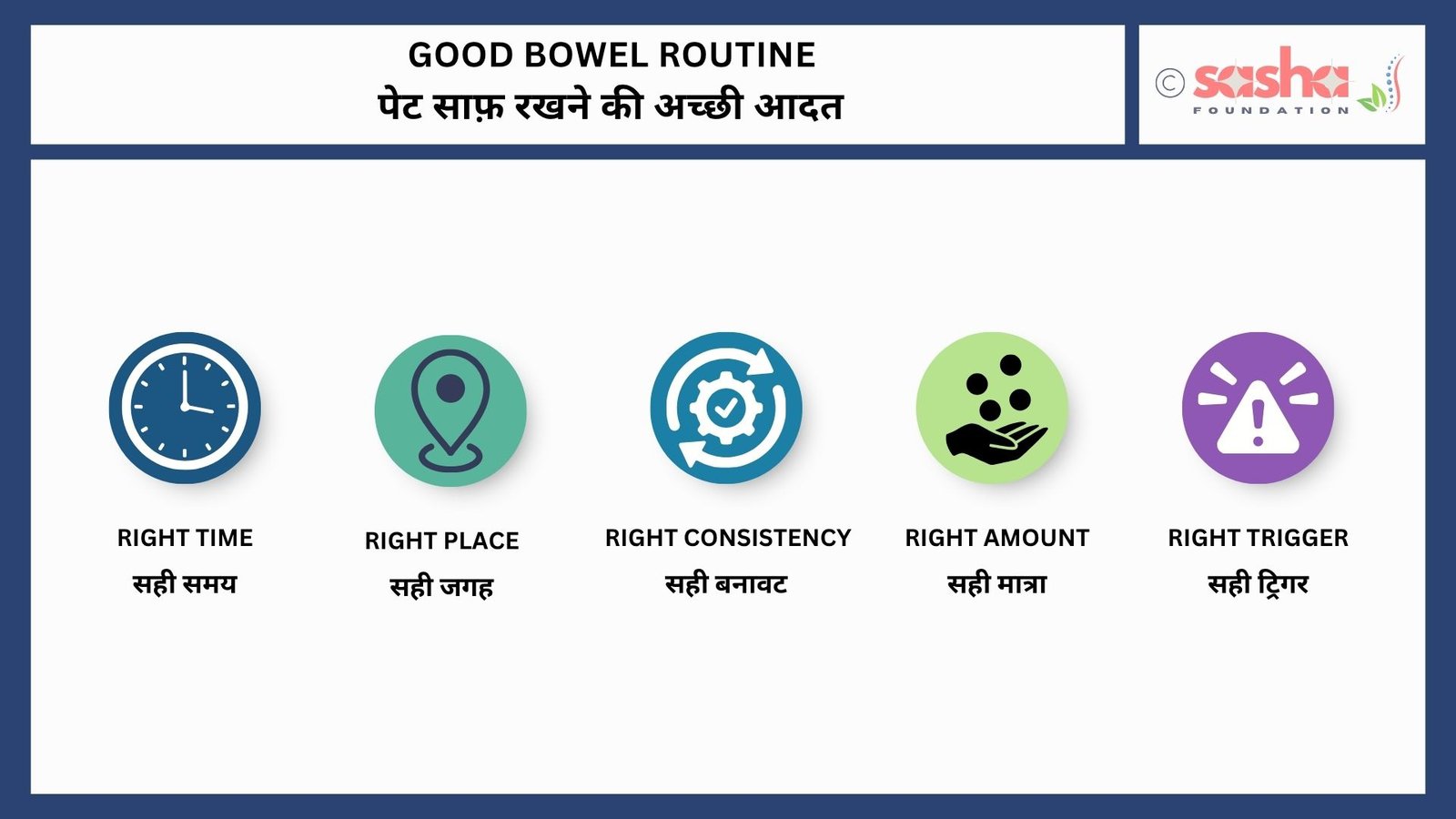
The following 5 rights of bowel management can help you design and establish a good bowel routine. Right here means what’s right (best) for you.
- Right time
- Right place
- Right consistency
- Right amount
- Right trigger
Right Time
Your goal should be to train your bowel to empty at a regular and consistent time every day; this will be your “Right Time”. Bowel training helps your bowel get into a routine. Over time, this can make bowel movements more predictable and easier to manage. The goal is to establish a consistent bowel routine and improve bowel control.
Depending on your needs or circumstances, you could further break it down into two parts:
- How often you want to empty your bowel
- How long your bowel routine should take
Some factors to consider when choosing your right time:
- Working hours
- Current bowel habit or before injury (in case of spinal cord injury). For example, before or after breakfast, before a shower.
- Availability of toileting facility or care support (if your parent or a caregiver assists or does the process for you.
Your “Right Time” will differ according to your neurogenic bladder type:
Reflex or an Upper Motor Neuron (UMN) Bowel
- Daily or every other day is recommended.
- Attending to bowel care three times per week or more is recommended.
- The average duration for defecation can range from 15-45 minutes, but this is reliant on the stool being low down in the bowel.
Flaccid or a Lower Motor Neuron (LMN) Bowel
- Ideally, a flaccid or lower motor neuron bowel routine is managed once or twice a day. In some cases, it can be thrice a day.
- The average duration for defecation can range from 15-30 minutes, but this relies on the stool being low down in the bowel.
Right Place
When we say “Right Place”, we don’t mean you being in the right place. The “Right Place” here refers to where the faeces is in the bowel, when you are ready to go to the toilet (your “Right Time”).
If stool is positioned too high in the bowel, you won’t be able to empty your bowel during your planned bowel routine. It may move down later and will cause an unplanned bowel movement. If stool is already too low in the bowel, a bowel movement may happen before you reach the toilet.
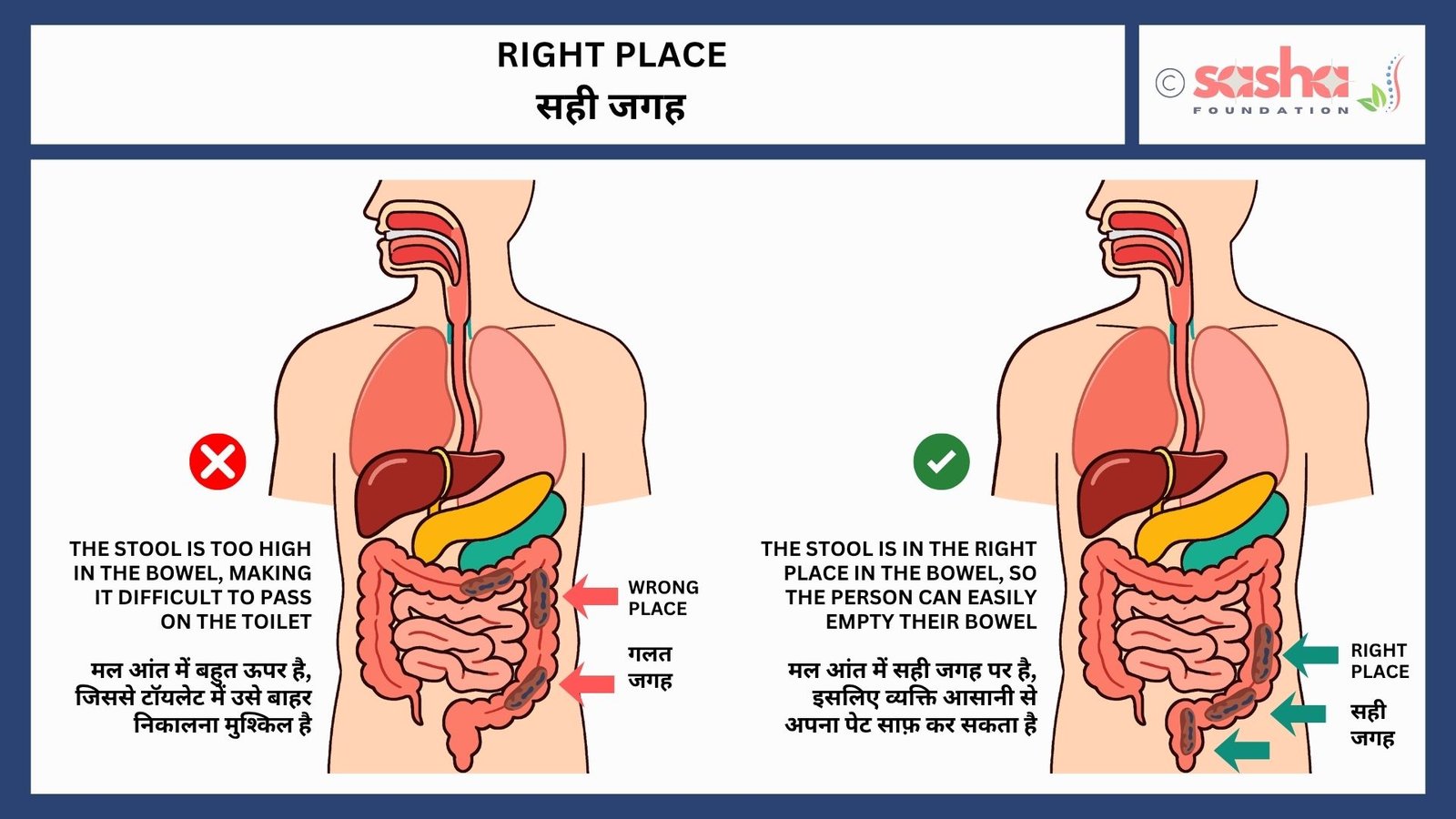
The most common way to help stool move to the “Right Place” in the bowel is by stimulating the system using food, medications, and/or physical activity.
Food
Regular meals and certain foods can help stimulate the digestive system and encourage the bowel to move stool along. Eating itself naturally triggers bowel activity, helping stool move into the “Right Place” for bowel emptying.
Some foods may have a stronger bowel-stimulating effect and can trigger bowel activity regardless of when they are eaten. For some people, using specific dietary strategies, such as including foods that naturally stimulate the bowel, may reduce or even eliminate the need for bowel medications. Most people can easily identify bowel-stimulating foods. These foods, if consumed correctly and in moderation, can help to achieve a regular bowel routine
Eating enough fibre is important for smooth bowel movement. Fibre makes the stool bulky and gives the digestive tract muscles something to ‘grip’ onto, pushing stool through the bowel more effectively. Bulky stool comes handy, which we will discuss later in this article. Fibre needs fluid to work effectively, so drinking plenty of water is vital.
Medications (Aperients and Laxatives)
Medications that stimulate the bowel are also referred to as aperients and laxatives. Most of these medicines are available for purchase over the counter or on Amazon. They come in many brands and strengths. These medications work by stimulating bowel motility, with the best effects occurring between 12 and 16 hours after taking the medication. The timing of these medications should be adjusted to suit your bowel routine. For example, if your “Right Time” is at 8 am, take the dose around 8 pm the night before.
It is important to keep in mind that changes to diet or having stimulants can directly affect the consistency of your stool.
Will you Always Have to Take Bowel Medication?
Some people may be able to reduce or stop some or all of their bowel medications, whereas others may need to continue them long-term to help maintain a regular bowel routine. There is no one-size-fits-all approach. This will be different for everyone and can also be influenced by diet, lifestyle, other medications, and activity.
Please note: An important thing to remember is that a well-established bowel routine helps stool reach the “Right Place” in the bowel at the “Right Time”, making bowel emptying more predictable. I have never taken these medicines and have managed my bowel evacuation very well without any accidents. Will explain my process later in this article.
Activity
Movements of all kinds – whether moving around the house, going out, walking and running (Spina Bifida individuals who can) or exercising – can trigger bowel motility. Any movement is better than none. So, movement before your “Right Time” can help your stool reach the “Right Place”. Gravity and sitting upright can also aid in digestive activity.
Right Consistency
To understand “Right Consistency”, you need first to understand constipation.
What Causes Constipation?
As food moves through your colon, water is gradually absorbed, helping to form stool. At the same time, muscle contractions (movements) move the stool toward the rectum. By the time it reaches the rectum, most of the water has been absorbed, and the stool becomes solid. The shorter the stool’s transit time, the softer it will be.
Constipation occurs when these muscle contractions slow down, causing stool to move too slowly through the colon. This gives the colon more time to reabsorb water, making the stool hard, dry, and more difficult to pass. The longer the stool’s transit time, the harder it gets.
Stool that is very soft or sticky, similar in consistency to toothpaste or peanut butter, can be difficult for the bowel to move along efficiently. It may also be harder to completely empty from the rectum. When soft stool remains in the bowel, it can build up over time and contribute to constipation.
Bristol Stool Chart

For Reflex or an Upper Motor Neuron (UMN) Bowel
A stool consistency between Type 2 and Type 4 on the Bristol Stool Scale is ideal for you. This consistency is usually easier to remove and helps reduce the risk of constipation.
For Flaccid or a Lower Motor Neuron (LMN) Bowel
Most people with Spina Bifida have their lesion at T12/L1 or below (flaccid or LMN bowel). A stool consistency between Type 1 and Type 2 on the Bristol Stool Scale is ideal for you. Firmer stools are usually easier to remove completely and less likely to leak out. Firmer (slightly constipated) stools help reduce the risk of unplanned bowel accidents later in the day.
I have Spina Bifida and an LMN bowel, so I follow a specific bowel routine and emptying technique. I never have bowel accidents. Later in this article, I’ll share the stool consistency I aim for and the practical strategies I use throughout the year to help maintain it.
What Influences Consistency?
Anything that increases the amount of water in the bowel can affect stool consistency. If you are experiencing constipation, increasing your fluid intake can help soften the stool and make it easier to remove. Aim to drink as much water as you can comfortably manage.
Fluids
One can achieve the right consistency simply by drinking enough water. Ideally, one should drink 2-3 litres of water every day. This daily water consumption limit can be tricky for people who have urinary incontinence or practice self-catheterization.
I self-catheterise and typically drink 4 to 5 litres of fluid each day. Over the years, I’ve developed a few simple strategies that help me maintain this level of hydration consistently and manage bladder issues. I will cover this in an upcoming article.
Softeners
Stool softeners come in two forms – dietary and medicinal. Stool softeners help increase the water content of stool. Many natural foods have a similar effect. Fruits such as oranges, pineapple, apples, pears, and watermelon, along with sorbitol-rich juices like pear juice, apricot nectar, kiwi fruit juice, and prune juice, can help soften stool and regulate constipation. For best results, include them regularly throughout the day.
Firmers
The most common dietary stool firmers are foods rich in soluble fibre. These include oats, bananas, vegetables such as sweet potato, carrots, green beans, potatoes, Brussels sprouts, and broccoli, as well as nuts and seeds like chia seeds and flaxseeds. Soluble fibre helps absorb water in the bowel, resulting in firmer, more formed stools. For some people, a fibre supplement like Psyllium husk may also be needed to achieve the desired stool consistency.
Stimulants
Stimulants were discussed in the “Right Place”.
SASHA’s Suggestion: A Note from the Author on Consistency
As someone who has neurogenic bowel and has been practising bowel management for the last three decades and teaching the same for the last two decades, I have some words of wisdom to share. To give you some context, I practice digital evacuation or manual evacuation to empty my bowel. Digital evacuation is the best method for emptying the bowel for people with flaccid or lower motor neuron (LMN) bowel. The following advice will work for everyone who wants to practice digital evacuation.
“Constipation is a blessing in disguise for people who have neurogenic bowel (especially for people with flaccid or lower motor neuron (LMN) bowel), so don’t fight constipation or try to resolve it; I want you to regulate your constipation”.
What do I mean by “constipation is a blessing in disguise”?
People with neurogenic bowel have reduced or absent anal sphincter tone, meaning they are unable to hold back gas or normal or loose stool. Constipated stool provides a degree of continence because it is less likely to pass through the anal canal unintentionally. Constipated stool acts as a natural barrier, reducing the risk of bowel leakage. For this reason, changing constipated stool to a softer (normal) consistency using softeners, firmers, or laxatives is counterproductive and can increase the likelihood of unexpected bowel leakage or accidents.
What do I mean by “I want you to regulate your constipation”
Regulating your constipation means actively maintaining stool firmness that won’t pass through the anal canal unintentionally but can be removed easily and intentionally, using digital evacuation or manual evacuation as a trigger.
The ideal stool firmness will vary from person to person. Finding what works best for you may require some trial and error using different strategies that influence stool consistency. During this process, be patient and keep a bowel diary to track any changes and identify patterns. In most cases, once you identify the right balance, you won’t need this process again.
What does this ideal stool firmness look like?
Aim for a stool consistency between Type 1 and Type 2 on the Bristol Stool Chart. Ideally, stools should consist of separate, rounded, well-formed bulky lumps that are firm and well lubricated. They should not be so hard that they feel rock-like, nor so soft that they can be easily compressed between your finger and thumb. In between is your sweet spot.
This natural lubrication comes from mucus, a small amount of clear or white, jelly-like substance produced by the bowel. Mucus helps stool move smoothly through the digestive tract and is a normal part of healthy bowel function. However, excessive mucus can be problematic. It may make the stool pathway too slippery, increasing the risk of leakage or unplanned bowel accidents. Excess mucus can also be passed when releasing gas, which may soil underwear.
If you notice that your stools are becoming softer than desired and mucus production is increasing, consider reducing your fibre intake and/or consuming foods that increase constipation, and monitor for changes. Keeping a bowel diary can help you identify patterns and maintain the stool consistency that works best for you.
What do I do to maintain my stool firmness?
I make it a point to eat two to three different types of fruit every day, regardless of where I am or the season. My go-to fruits are pomegranates, oranges, watermelon and pineapple. I also add two to three tablespoons of chia seeds to my daily routine. I soak the chia seeds in a small bowl of water for two to three hours, then add small amounts to my protein shakes throughout the day.
The goal is to consume the soaked chia seeds gradually rather than all at once. Avoid blending or crushing them. Instead, consume them whole after soaking. You could mix them in smoothies, shakes, yoghurt, or juices.
In my experience, chia seeds have helped me create bulkier, well-lubricated stools that are easier to remove. Start with two tablespoons per day and adjust the amount based on your stool consistency and results. As with any dietary change, monitor the effect over time and adjust your fibre intake as needed. Please note that I have never taken aperients or laxatives.
Right Amount
While the amount of stool passed varies between individuals, it should be broadly related to food intake. If stool output is less despite adequate food consumption, it may indicate incomplete bowel emptying and serve as an early warning sign of developing constipation.
The size and volume of your stool are directly related to what you eat. Diets that are high in fibre tend to produce larger, bulkier stools, while diets that are lower in fibre generally result in smaller stool volumes.
What is Fibre and Why is Fibre Important?
Also known as roughage, fibre is a type of carbohydrate that the body can’t digest. It helps digestion and supports overall gut health. Fibre makes the stool bulky and gives the digestive tract muscles something to ‘grip’ onto, pushing stool through the bowel more effectively.
How Much Fibre Should You Have?
Average children and adults need at least 25 to 35 grams of fibre per day for good health. Spina Bifida and spinal cord injury individuals should start at 15 to 20 grams per day, and increase slowly and gradually as you need. As recommended earlier, drink enough water as per your fibre intake.
What are the Types of Fibre?
Fibre comes in two varieties: soluble fibre and insoluble fibre, both beneficial to health:
Soluble Fibre
Soluble fibre dissolves in water, forming a gel-like substance, and can help make stool firmer. Soluble fibre can slow stool movement through the colon and is useful when you are pooping more than usual with no clear cause. Foods with soluble fibre include oatmeal, chia seeds, nuts, beans, lentils, apples, and blueberries.
Insoluble Fibre
Insoluble fibre doesn’t dissolve in water and can help food move through your digestive system. Insoluble fibre adds bulk to the stool and passes through the bowel more quickly than soluble fibre. Extra bulk helps to push a greater volume of stool through to the rectum. Foods with insoluble fibres include whole wheat products, quinoa, brown rice, legumes, leafy greens like kale, almonds, walnuts, seeds, and fruits with edible skins like pears and apples.
Tips for Adding More Fibre
Fine-tuning your diet is a process that takes time. Carefully plan your meals around what supports your bowel routine, not around what others are eating. Once you have identified the foods and eating habits that work for you, stick with them consistently. For people with neurogenic bowel, dietary changes can take several days to influence stool consistency and bowel emptying, so make one change at a time and give it time to work before making further adjustments.
- Eat at least 1-2 pieces of fruit each day.
- Ensure lunch and dinner meals contain at least 50% of colourful vegetables and/or salad.
- Choose some nuts as a snack.
- Switch from white to multigrain or wholemeal bread.
- Add lentils or other legumes to dishes.
- Include oats, muesli or wholewheat cereal as breakfast options.
- Have 2-3 tablespoons of soaked chia seeds.
Right Trigger
Once you have figured out and set your “Right Time” and the stool is at the “Right Place”, the “Right Trigger” can help you empty your bowel effectively. “Right Trigger” is a tool you use to remove stool when “Right Time” and “Right Place” align.
There are various ways to trigger defecation, and deciding which one to use can depend on the following factors:
- Level of injury and functional ability – Level of injury (in case of spinal cord injury) and functional ability (for people with Spina Bifida or spinal cord injury) may make it difficult or impossible to practice certain trigger tools mentioned here. Some individuals have impaired hand function and will need assistance from healthcare givers, parents or relatives.
- Time constraints – Some of the trigger tools are time-consuming in nature. Are you willing to dedicate 10 – 45 minutes of your time every day to trigger defecation? For example, suppositories to stimulate the defecation reflex can take 20 – 45 minutes and are best executed while you are in bed; you move to the toilet when the bowel movement is expected. Suppositories not only require a lot of time, but you also need two places (bed and toilet) all to yourself to do the process comfortably. Alternatively, enemas can take 5-20 minutes to work, so you have to sit on the toilet and wait for it to work.
- Personal preference – There is no single “best” trigger for defecation. The right choice depends on what works for your body and lifestyle. This may involve a suppository, enema, digital stimulation, digital evacuation, bowel irrigation, or a combination of these methods.
- Cost constraints – Cost is an important consideration when selecting a trigger method for yourself. Some techniques require regular medical supplies, which may not be affordable for everyone. Where insurance coverage is limited or unavailable, the financial burden often rests with the individual and their family. In such cases, a low-cost or no-cost approach, such as digital evacuation, may be a practical and sustainable option, as it requires minimal or no medical supplies.
Methods to Trigger Defecation:
- Digital Removal of Faeces (DRF)
- Bowel Irrigation or TAI
- Enemas or Suppositories
- Digital Stimulation
Digital Evacuation or Digital Disimpaction
Also known as:
- Digital Removal of Faeces (DRF)
- Manual disimpaction
- Manual evacuation
- Manual removal of stool
Digital evacuation, also called digital disimpaction or manual evacuation, is a process in which a person uses their finger to remove stool from the rectum. Digital evacuation helps ensure that the lower bowel is empty of stool. By emptying the lower bowel, this approach can provide reassurance and confidence, helping the person participate in everyday activities with less concern about unexpected bowel leakage or accidents.
This bowel management method is commonly performed two to three times a day, but there is no strict rule regarding frequency. The objective is to reduce the likelihood of unplanned bowel movements. Because stool continues to move through the bowel during the day, the optimal frequency will vary depending on factors such as age, diet, and activity level. When stool reaches the lower bowel, it can be removed using digital evacuation.
Digital evacuation is the best option for stool evacuation for people with flaccid or lower motor neuron (LMN) bowel. As you learnt earlier, people with Spina Bifida who have their lesion at T12/L1 or below and people with spinal cord injury who have their injury at T12/L1 or below have flaccid, or LMN bowel and hence should follow this option for stool evacuation.
It may also be used by people with reflex or upper motor neuron (UMN) bowel if their tools are insufficient to complete proper bowel evacuation.
SASHA’s Suggestion: A Note from the Author on Best Hand and Best Finger
Have you ever wondered which hand and finger are best for digital evacuation? The choice can significantly affect how safely, comfortably, and efficiently you can perform the procedure.
Most healthcare professionals and educational resources recommend using the index finger. While this is not wrong, it is not the best option for people who perform digital evacuation regularly.
For most people, the best hand to use is the dominant hand, as it offers better control, dexterity, and sensitivity. In my experience, the middle finger is the most effective finger for stool removal. Being the longest finger, it can reach further into the rectum and access stool that sits higher in the lower bowel, making complete evacuation easier.
The middle finger also provides a practical advantage. Once inserted, the fingers on either side act as anchors against the buttocks, improving stability, leverage, and the pulling motion needed to remove stool efficiently.
Because digital evacuation requires repeated scooping and pulling, the hand and finger you use become stronger, more coordinated, and better adapted over time. For this reason, choose your hand and finger carefully, as they are likely to become your long-term tools for bowel management. Switching to a different hand or finger later can be uncomfortable and may reduce your reach, control, and effectiveness.
Necessary Supplies
Let’s discuss the necessary supplies you will need for digital evacuation
- Latex gloves (non-latex if you are a Spina Bifida person and have a latex allergy)
- Water-based lubricant
- Soap and water
- Toilet paper
- Plastic bag or dustbin to throw your waste in
- Commode chair or a shower chair (for anyone who needs one)
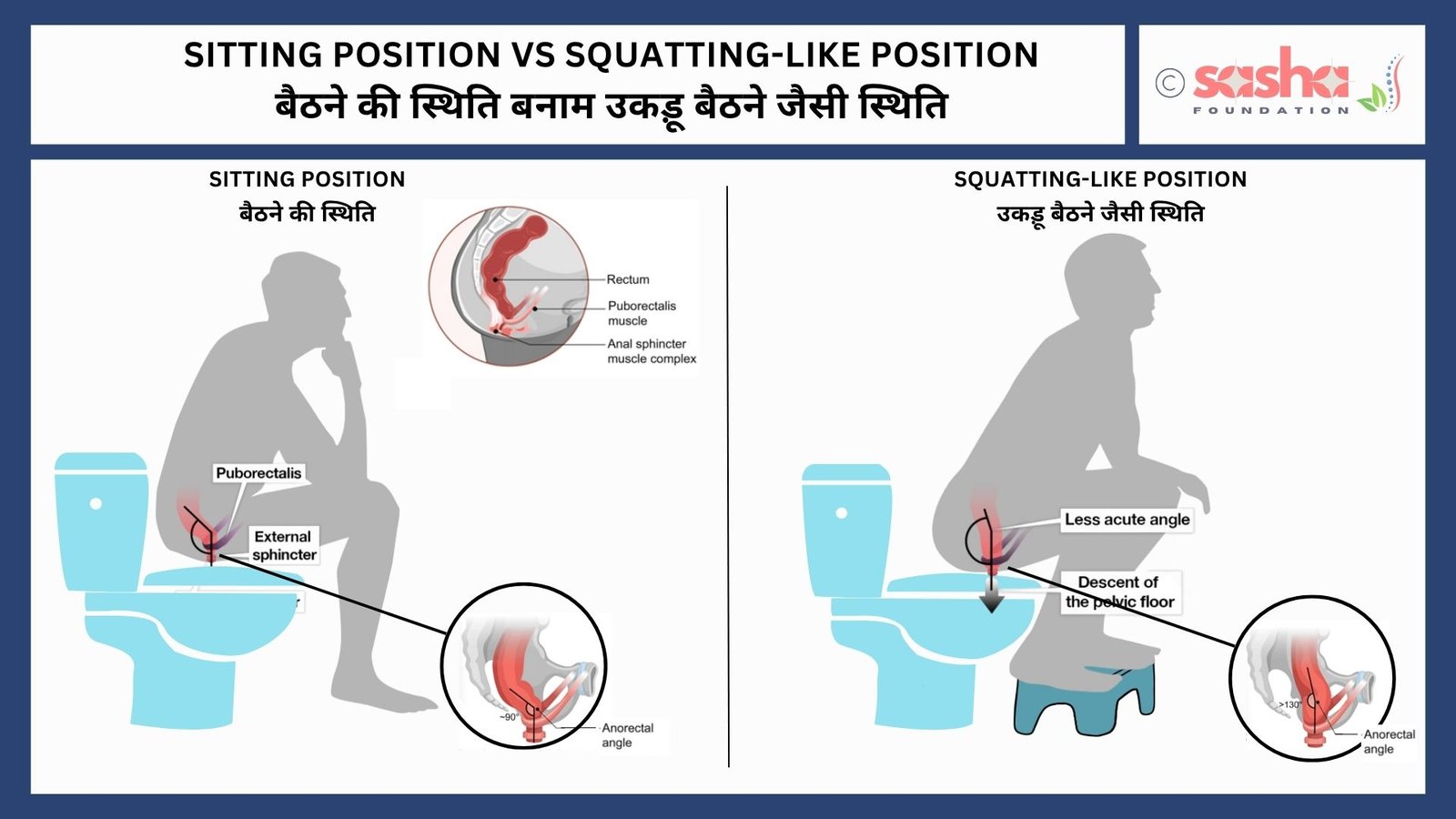
- Step Stool (for squatting-like position and deeper access)
- Wet wipes and underpads for someone who remains in bed
- A container or a bag for stool disposal for someone who remains in bed
If the Procedure is Taking Place on the bed
- Put the underpad on the bed, under the buttocks of the person.
- Have the person lie on the left side (left lateral position) with knees bent and pulled towards the belly for better access to the anus. In this position, the buttocks automatically spread apart, making it easy for the caregiver to do the procedure.
- This position also gives the caregiver good access for post-procedure cleaning.
- Put your necessary supplies close to you.
If the procedure is Taking Place in the Toilet
- Find a comfortable position with good anal access, either on the toilet, a commode chair or a shower chair.
- Put your necessary supplies close to you.
- Put the step stool under your feet. A step stool can help better stool evacuation.
Step-by-Step Guide: How to do Digital Evacuation
Step 1 – Wash your hands thoroughly with soap and running water.
Step 2 – Sit in a comfortable position on the toilet, a commode chair, or a shower chair.
Step 3 – Put on a fresh pair of gloves.
Step 4 – Apply a water-based lubricant to your middle finger. Gently and slowly insert the finger into the rectum to check for stool. Rotate your finger to assess the amount and consistency of the stool present.
Step 5 – If the stool is a hard, solid mass: Using a gentle side-to-side scissor motion, move your finger back and forth to break up the stool. Remove it in small sections until no stool remains.
Step 6 – If the stool is present in large, firm lumps: Use a gentle scooping motion around each piece of stool. Slightly bend your finger into a hook shape and carefully remove one piece at a time.
Sometimes, you may find a piece of stool that is difficult to move or does not allow enough room to scoop around it. If this happens, be patient. Gently move your finger in a circular motion against the rectal wall just beneath the stool for a few seconds. Then try again to move your finger around the stool and repeat the scooping motion. In most cases, this will make removal easier. Continue until all stool has been removed from the lower bowel.
Step 7 – If the stool is soft: Gently move your finger in a circular motion around the inside of the rectum and remove the stool. Continue until all stool has been removed from the lower bowel.
Step 8 – Dispose of the stool appropriately.
Step 9 – Remove the soiled gloves and place them in a waste bag for disposal. Avoid touching other surfaces before disposing of the gloves, as faecal bacteria can spread infection.
Step 10 – Wash the anal area thoroughly with water and dry it with toilet paper.
Step 11 – Wash your hands thoroughly with soap and running water.
Step 12 – Record the outcome in your bowel diary, including the amount and consistency of the stool using the Bristol Stool Scale.
Please note: Occasionally, you may be able to feel one or more pieces of stool that cannot be removed. If this occurs, end the current bowel evacuation session and try again at the next scheduled evacuation, when the stool will descend lower into the bowel and be easier to remove.
Bowel Irrigation or TAI
Bowel irrigation, also known as rectal irrigation or trans-anal irrigation (TAI), empties the lower bowel. It is a treatment option when other methods like medications, dietary changes, and fluid adjustments have not been effective.
Typically, the procedure involves inserting a rectal catheter and flushing the bowel with lukewarm water. Insert a rectal catheter with a balloon or a cone catheter (without a balloon) into the rectum. Inflate the balloon to hold the catheter in place while instilling the water. After instilling the water, remove the catheter and empty the bowel. The water softens the stool and stimulates peristaltic movements, which help the stool move towards the rectum for evacuation. Perform the procedure on the toilet, and you can do your bowel irrigation at home.
If a person has had the MACE procedure, they can administer enemas or irrigation at the beginning of the colon instead of through the rectum at the end. The Malone Antegrade Continence Enema (MACE) procedure, also known as an appendicostomy, is a surgical procedure that creates a passageway from the abdomen to the colon. We will talk about the MACE procedure in detail in a different article. MACE has some downsides which need some discussion.
Digital Evacuation vs Bowel Irrigation: Advantages
- Quick Relief: Provides immediate relief from severe constipation and rectal discomfort.
- No Equipment Needed: Requires only a gloved, lubricated finger, making it simple and accessible.
- Effective for Impaction: Particularly useful for removing hard, impacted stool that other methods can’t address.
- Minimal Preparation: Does not require extensive preparation or setup.
- Immediate Results: Offers quick results, often within minutes.
- Useful in Emergencies: Can be performed in urgent situations where other methods might not be feasible
Benefits of Bowel Management
Here are some benefits of a regular bowel evacuation routine:
- Prevents Constipation: Helps maintain regular bowel movements and prevents constipation.
- Reduces Bowel Leakage: Minimises the risk of accidental bowel leakage.
- Improves Comfort: Reduces discomfort and bloating associated with irregular bowel movements.
- Enhances Quality of Life: Provides greater control over bowel management, improving overall quality of life.
- Saves Time: Reduces the time spent on the toilet, making daily routines more efficient.
- Promotes Independence: Allows individuals to manage their bowel health independently.
- Reduces Medication Dependence: Decreases the need for laxatives and other bowel-related medications.
- Supports Social Activities: Enables participation in social activities without the worry of bowel issues.
SASHA’s Suggestion: A Note from the Author
A high-fibre diet or fibre supplements should always be accompanied by adequate fluid intake. Without enough fluid, fibre can become dry and compacted in the bowel, making stool movement harder and increasing the risk of constipation.
Fibre supplements should be taken separately from medications, as they can reduce the absorption of certain medicines. As a general rule, allow at least a two-hour gap before or after taking medication.
If you are trying to improve bowel management of a person with neurogenic bowel, remember that changes do not happen immediately. Dietary changes, fluid adjustments, and medications often take 4 to 6 days to affect stool consistency and bowel emptying, especially when using stool softeners or firmers. Make small changes, give your body time to respond, and then review the results before making additional adjustments.
If your stool output or consistency changes unexpectedly, it may indicate that you have drifted away from a routine that normally works. For people with Spina Bifida or spinal cord injury, a consistent approach usually produces the most predictable results. Once you have found a combination of diet, fluids, supplements, and bowel management techniques that works well, stick with it and avoid unnecessary experimentation.
Medical information
Our articles provide general educational information and guidance about Spina Bifida and Spina Bifida related issues, like bowel management, bladder management, self-catheterization, digital evacuation, orthopaedic issues, chronic neuropathic pain and surgeries, etc. Our articles are not a substitute for individual medical advice, diagnosis or treatment. Every person with Spina Bifida is different. Please discuss your individual circumstances with your qualified healthcare professional.
About the Author

Raul/DJ Vivek
Meet Vivek Bharadwaj, a remarkable individual who has defied the odds and soared to new heights despite living with Spina Bifida. As the founder of the Sasha Foundation, Vivek tirelessly advocates for others facing similar challenges. His unwavering commitment to support, awareness, and empowerment had made a lasting impact on the Spina Bifida community.
FAQ
Which is better, bowl irrigation or digital evacuation?
In our opinion, digital evacuation is better and faster. In digital evacuation there is no need for any equipment, can be done anywhere and in any position.
Is constipation good for people with Spina Bifida?
Yes, it is a blessing in disguise. Loose or semi-loose, or “right consistency” stool can result in leakage and accidents. Constipated stool (Type 2 in the image) doesn’t leak and can be removed without causing a mess.
How much fiber should I take?
It depends on your age and gender. People with SB should find and stick to the right intake that keeps the constipation but in a manageable way. Fibre also makes your stool bulky and lubricated, thus easy to remove in big chunks.
What is a bowel irrigation?
Bowel irrigation is when water is introduced into the bowel via the rectum or through the catheter into your lower bowel. The water is expelled into the toilet flushing out any faecal matter with it thereby emptying your bowels.
Can I irrigate my bowels at home daily?
Yes, you can.
How long does bowel irrigation take?
The process takes approximately 20-35 minutes.
Is bowel irrigation the same as an enema?
A colon cleanse is not the same thing as an enema. With an enema, you use liquid to clean out your rectum and the lower part of your colon.
How painful is bowel irrigation?
Bowel irrigation is a safe and gentle procedure. However, some people may experience side effects which can include mild abdominal cramping, bloating, or feeling full, and pain in the rectal area
What is a digital evacuation?
Removing stool with the aid of your finger is called a digital evacuation.
How painful is digital evacuation?
Digital evacuation or digital disimpaction is not painful at all.
Is it possible to hurt yourself during digital evacuation?
Not really. However, you should not have long fingernails and be patient in the process.
How long does digital evacuation take?
The process takes approximately 5-7 minutes.
How many times a day do I need to digitally evacuate?
Usually twice a day. It depends on how much you are eating and what you are eating.
How to move your finger for the best digital evacuation experience?
Move your finger back and forth in a side-to-side scissor motion to break up the hard stool. Next, bend your finger slightly and move it in a circular motion inside the rectum to help remove the stool.
Which hand and which finger should I use for Digital evacuation?
You should use the middle finger of your strongest hand. The middle finger is the longest and has the highest reach. We suggest you train the right finger and hand, right from the beginning as it is difficult to switch later.
What is the best position for the digital evacuation?
You can either sit on the toilet seat and remove or you can half squat (if your legs support it) and remove it, or you can lie down sideways, fold your legs to your stomach remove it and put it in a container. Call us!
Do I need to use gloves during digital evacuation?
It’s a personal choice. We recommend that you don’t use gloves. Please note that a lot of SB people have a latex allergy. You can keep rinsing your hands with the health faucet’s water and remove piece by piece. Also, with gloves, you can’t use water to wet (lubricate) and clean your hand/finger. You will have to use Lidocaine Jelly or some kind of water-based lube.
Do I need to use Lidocaine Jelly or any water-based lube if I am not using gloves?
No. You can use water to clean and lubricate your finger every time to re-enter your rectum.
Will using just bare hands and water (no gloves) increase my chances of UTI?
No. Always remember to self-catheterise first and after that do digital evacuation if you have to do both. If you are doing just digital evacuation, you need to wash your hands properly post-evacuation.
How do I keep my buttocks clean post evacuations? Do I need to bathe every time after?
Wash with health faucet or bidet water and dry with toilet paper or a cloth. While bathing, wash your buttocks with soap or intimate wash. Women in particular should maintain the best butt hygiene as the distance between vulva and rectum is less.
Does removing buttocks (midline and perineum) hair in teenagers and adults who practice bowel irrigation or digital evacuation, beneficial?
Yes, maintaining hair-free areas can improve hygiene and help prevent urinary tract infections (UTIs). Maintaining hygiene becomes particularly challenging for women and those with frequent accidents due to bowel incontinence.
Does bowel irrigation or digital evacuation help with farts (gas)?
A clean and empty bowel can help with gas. If you have painful gas and bloating, it may be because it is trapped behind stool.
Can people with Spina Bifida control farts (gas)? And why?
No. A lot of people with Spina Bifida, especially with myelomeningocele, can’t control farts because their anal tone is missing. The anal sphincter is incapable of holding gas at will. Kegels and pelvic floor exercises can help with this issue.
Can bowel problems affect sex life?
Yes. Most people with bowel incontinence are afraid of accidents during the act.
Can sex cause bowel movement or bowel leakage?
Yes. Orgasm/Ejaculation can trigger bowel movement, especially, in men with Spina Bifida. Accidents may occur if the stool is not constipated and if the anal tone is missing. The bowel movement post-ejaculation, in men, seems to subside when one has sex regularly for a long period.
How can I avoid accidents during sex?
Empty your bowel properly, beforehand. Further, you can masturbate before you meet your lover. Masturbation will trigger the bowel movement and you can digitally remove the descended stool. Stay constipated.
Why do a lot of people with Spina Bifida get diarrhoea during a course of antibiotics?
This is known as antibiotic-induced diarrhoea or Antibiotic-associated diarrhoea (ASD). We understand how uncomfortable diarrhoea can be for someone who doesn’t have an anal tone and can’t hold it. Most people don’t even have enough reaction time to reach the toilet.
How can I avoid antibiotic-induced diarrhoea or Antibiotic-associated diarrhoea (ASD)?
You should always let your doctor know which antibiotics trigger this and ask for the ones which do not. For example, nitrofurantoin and fluoroquinolones (norfloxacin, levofloxacin, and ciprofloxacin) are some examples that, when taken orally don’t trigger ASD. Augmentin which is commonly prescribed after a urine culture, is a big culprit and will trigger ASD. You should also know that probiotics with antibiotics don’t help either. If you have easy access to nursing staff, taking injectable antibiotics instead of oral will help. We at Sasha encourage individuals or family members to learn how to give injections and put an IV (canula) line. This way help is always there and it also saves money.